
Industry News
Is the HOWO Truck Really Good? An 8-Year Owner's Honest Review
Search "is the HOWO truck good" and you'll find two completely opposite opinions online: some say "HOWO is tough and unbeatable value," others say "Chinese trucks can't match European, American, or Japanese brands — full of small issues." Neither answer is entirely wrong — they're just both incomplete.
This isn't a manufacturer press release, and it isn't a hit piece on the competition either. It's a real, unfiltered account from someone who's run a HOWO truck for 8 years — the good, the bad, and the actual cost of ownership — so you can make a more informed decision. After all, you're not buying based on an ad; you're buying a truck you'll be running for 8, maybe 10 years.
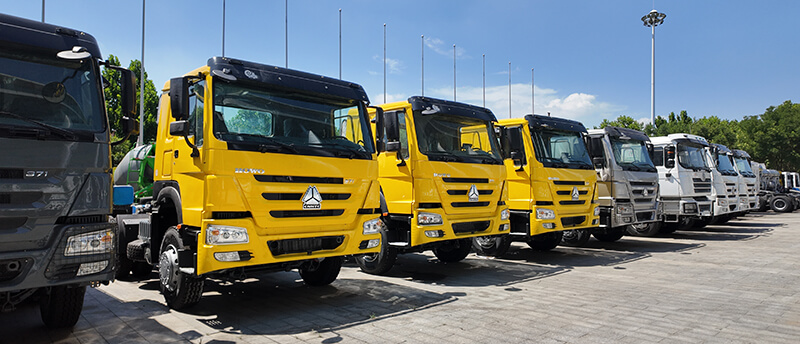
What 8 Years With This Truck Actually Looked Like
This truck started out on domestic highway freight routes. From year four onward, it shifted to a mix of construction site and short-haul mining transport, and has now logged over 600,000 km total. It went through one major engine overhaul (year five, at around 450,000 km), the transmission has never needed a rebuild, and the chassis and axles have gone through routine maintenance and wear-part replacement along the way.
This kind of usage intensity and timeline is fairly representative of how most HOWO owners actually run their trucks — this isn't lab data, it's real mileage earned hauling real loads.
The Good: Real Experience, Not Marketing Copy
1. Strong Power Reserve, Reliable Under Heavy Load
HOWO's performance under heavy load genuinely stands out at this price point. Climbing fully loaded, running long-distance heavy freight — the power margin is noticeably more confident than other brands in the same price bracket, which is exactly why HOWO remains so popular in mining and construction site applications.
2. Parts Are Easy to Find and Affordably Priced
This is one of the most tangible advantages in daily use — whether it's routine maintenance items or wear parts for the drivetrain and suspension, availability is high and prices are noticeably lower than comparable European or American brands. For any fleet trying to control operating costs, this is a real, practical benefit.
3. Quick to Repair — Ordinary Mechanics Can Handle Most Issues
HOWO's design is mature and highly standardized, so most repair shops — domestically, and even many local shops overseas — can handle common faults without needing a specialized brand dealership. That significantly cuts down on downtime and repair costs.
4. Genuinely One of the Best Value Options at This Level
Looking at purchase cost, maintenance cost, and parts cost together, it's genuinely hard to find a better option at this price point when it comes to "capable of heavy work at a controllable cost."
The Bad: Being Honest About the Downsides Too
1. Early Batches Did Have Some Minor Issues
In the first two years, there were a few minor electrical faults — things like abnormal dashboard readings or sensor sensitivity issues. None were serious, and all were quick to fix, but they did happen, and it wouldn't be honest to leave them out.
2. Build Quality Still Lags Behind Western and Japanese Brands
Interior materials, cab noise insulation, and long-haul driving comfort still fall short compared to premium brands like Volvo or Scania. If your drivers place a high value on driving comfort, this is something to factor in before you buy.
3. Resale Value Is Only Average
Compared to some international brands, HOWO's resale value isn't particularly strong — this is a common challenge across Chinese heavy truck brands industry-wide, not something unique to HOWO, but it's still a cost factor worth including in your purchase decision.
4. Overseas Buyers Should Confirm Local Parts Supply Chains First
For buyers in Africa, Southeast Asia, or Central Asia, HOWO's overall parts and after-sales network coverage is solid, but it varies significantly by country and region. Before buying, it's worth confirming that stable parts supply and repair channels actually exist locally — you don't want to end up in a situation where the truck isn't broken, but a part takes a month to arrive.
After 8 Years, Does the Math Actually Work Out?
Adding up purchase cost, 8 years of maintenance (including one major engine overhaul), parts cost, and fuel cost, this HOWO truck clearly outperforms comparably priced competitors on the metric that matters most: cost per kilometer of operation. That's exactly why, despite the downsides listed above, I'd still seriously consider HOWO for my next purchase.
That conclusion does come with a condition, though: the vehicle needs to be maintained on schedule, not chronically overloaded, and backed by a stable parts supply chain. Without those three things in place, no heavy truck brand — HOWO included — is going to make it to 8 years and 600,000 km.
Final Verdict: Is the HOWO Truck Really Good?
If I had to sum up 8 years of real-world experience in one line: HOWO isn't flawless, but on the metrics that actually matter — capable of heavy work, controllable cost, and easy to repair — it genuinely earns its reputation for value.
It's not the right choice if driving comfort and resale value are your top priorities. But for fleets and owner-operators focused on controlling operating costs and minimizing cost per kilometer, HOWO remains a genuinely worthwhile option to consider.
If you're considering a new or used HOWO truck, contact us — we can recommend the right model and configuration for your specific use case (mining, highway, or short-haul), backed by real vehicle condition data.
Categories
Latest News
Contact Us
Contact: Snailtruck
Email: snailtruck@snailtruck.com
Phone/Whatsapp: +86 18705477225
Add: NO.168 Quanpu Town, Liangshan County, Jining City, Shandong Province, China
 snailtruck